
Landscape Lighting: LED, Low Voltage & Outdoor Lighting
Coastal‑grade landscape lighting for Gulf Coast homes. From driveways and patios to docks and pools, we design and install efficient lighting systems that enhance safety, security, and curb appeal.
We design landscape lighting for homeowners who want more than visibility. We create outdoor spaces that feel welcoming, secure, and quietly elegant long after dark. Lighting that respects coastal conditions. Lighting that protects your family and guests. Lighting that turns evening into your favorite time of day.
Learn why professional landscape lighting matters, what makes it coastal ready, how the process works, and how to take the next step with confidence.
Why landscape lighting is such a smart move
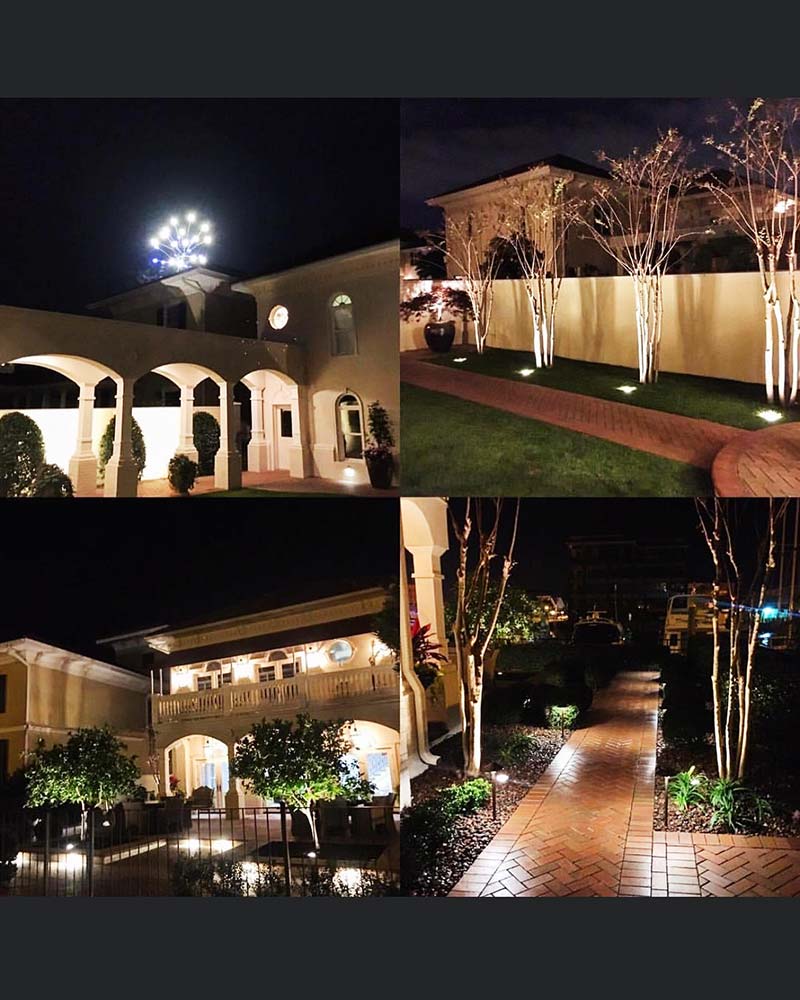
Out of all the outdoor upgrades you could do, landscape lighting is one of the fastest to change how your home feels. It does three big things at once: it helps people stay safe, it makes your property look better and it lets you actually use what you already own at night.
Around here, that last part is a big deal. We get warm evenings for months. People sit out to watch storms roll in over the water. Kids run around after dark. Friends drop by and end up on the patio long past dinner. When your yard is dark, you either cut those nights short or you live with a low-level worry every time someone walks down the steps.
Most quick DIY setups never quite fix that. A couple of bright floods on the house give you glare and harsh shadows. Cheaper fixtures corrode in a season. Wires get loose. You know the look: bright spot at the garage, black holes everywhere else.
A professionally designed system tuned for coastal life feels different. It:
- Puts light where you actually walk and gather
- Protects fixtures from salt and storms so they last
- Uses low-voltage LEDs that sip power instead of guzzling it
- Makes your home look finished instead of half thought out
In other words, it is a practical upgrade that also happens to feel really good every evening when you pull into the driveway.
How landscape lighting changes life on the Gulf Coast
Enjoying your outdoor spaces after dark
Think about the parts of your property you barely touch at night: the corner of the patio where the best chairs are, the path to the fire pit, the spot by the water that would be perfect for a nightcap. Most of the time, they sit unused simply because you cannot see.
When we dial in the lighting, those areas stop being “extra” and start being part of your nightly routine. A soft glow around seating so you can see faces without feeling like you are on a stage. Gentle accents in the trees so the yard has some depth instead of looking like a blank wall. Just enough light on the pool edge that you can tell where water begins and hard surface ends.
You might find yourself eating outside more. Letting the kids swim past sunset because you can actually see every step. Sitting at the edge of the dock just to watch the lights reflect on the water. That is the point.
Curb appeal and how your home shows up
Drive through any coastal neighborhood at night and you can pick out the homes that took lighting seriously. The ones where the house glows softly, trees have depth and the driveway looks like an invitation, not a guessing game. Thoughtful lighting:
- Brings out the shape and texture of your home
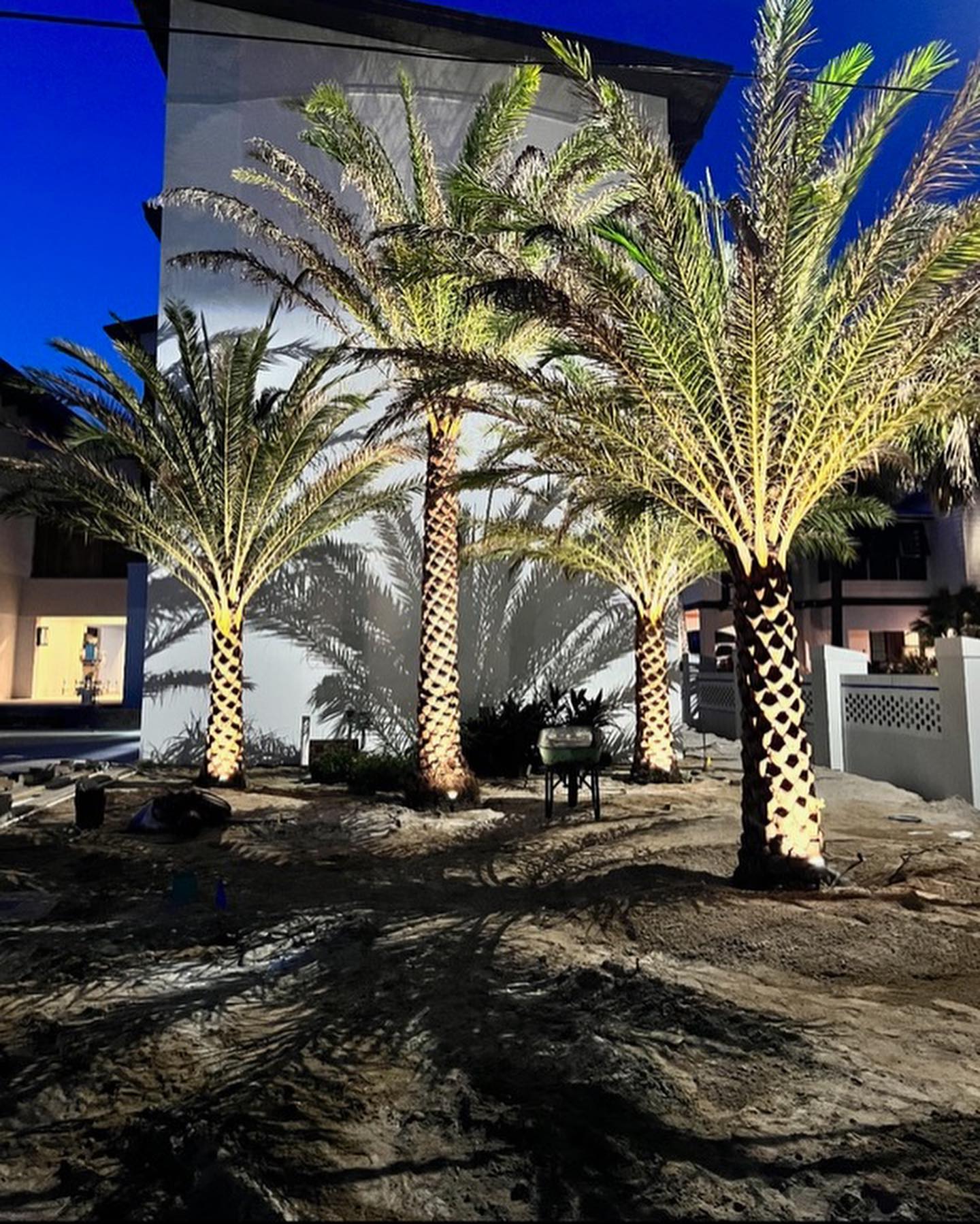
- Shows off mature palms, oaks and key landscape features
- Makes the front path obvious and comfortable for guests
People notice. Buyers notice. Even your own sense of pride changes when you turn onto your street and your place looks like it belongs in a magazine photo instead of blending into the dark.
Safety on paths, steps and near the water
Now we get to the part nobody likes to think about, but everybody quietly worries about. Tripping on a step. Catching the edge of a paver. Misjudging where the dock ends.
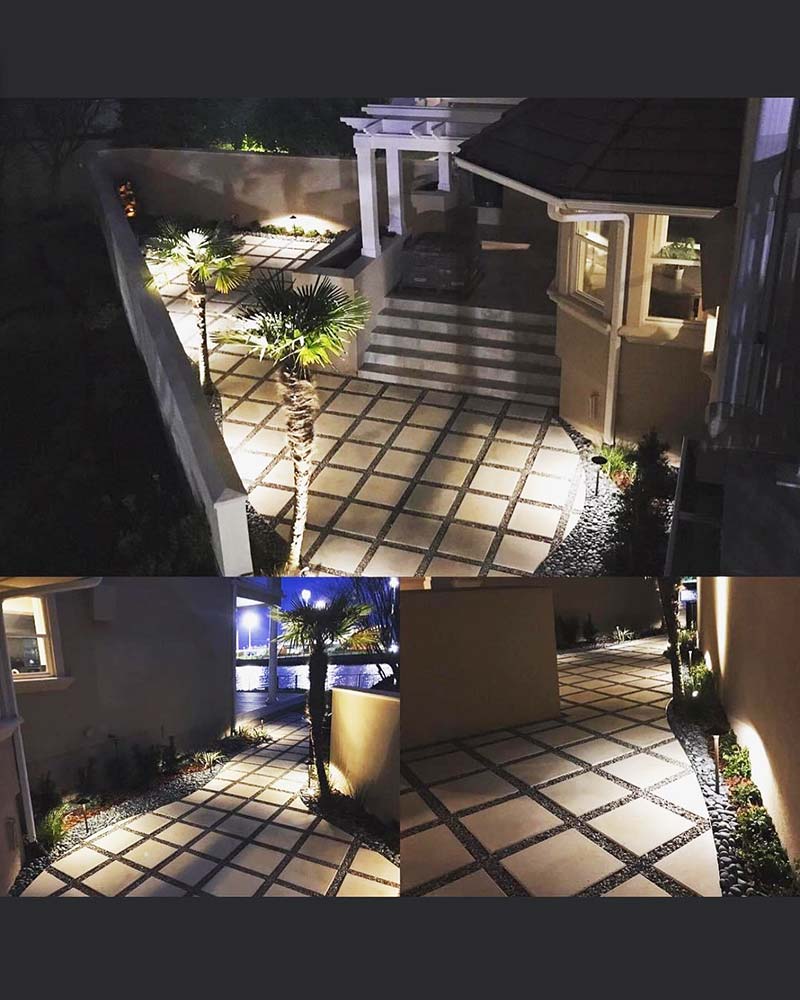
Clear, well-placed light makes those moments far less likely. When steps, transitions and edges are defined, people move with more confidence and less guessing. This is especially important if you have older family members, kids, guests who do not know the layout or any area that stays damp or slick.
The idea is simple:
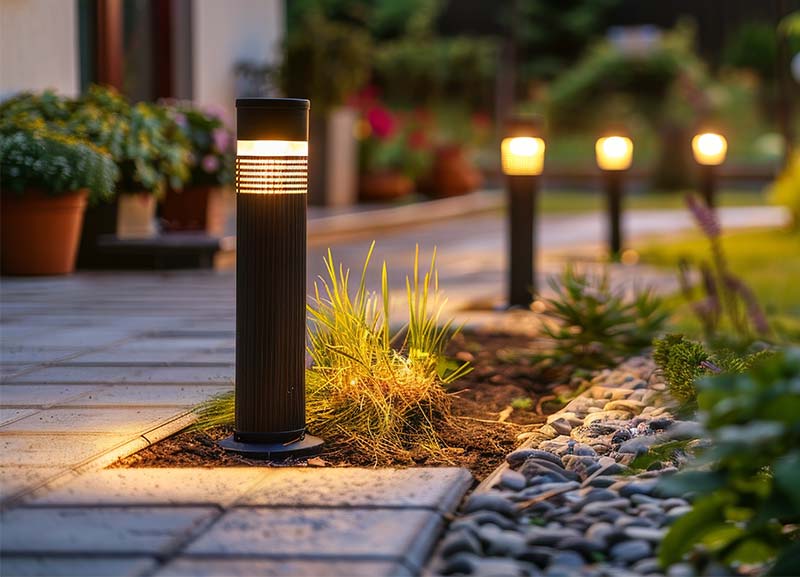
- Path lights that show you where to walk
- Step lights that outline each riser
- Dock edge and stair lights that quietly mark danger zones without blinding anyone
It is not dramatic. It is just the kind of safety you notice most when it is missing.
Security and basic peace of mind
Good lighting is not a magic security system, but it does remove a lot of hiding spots. A dark side yard, unlit entry, or blacked-out backyard is more inviting to the wrong sort of attention than a property that looks awake and cared for. Lighting can:
- Brighten key approach routes to doors and gates
- Support cameras and make recorded footage more usable
- Make it easier for you, your neighbors and passing traffic to see what is going on
You get home, lights come on when they should, and the property feels watched over instead of deserted. That alone can be worth the effort.
Energy use and ongoing cost
People often assume “more lighting” means “bigger power bill.” With modern low-voltage LEDs, that is usually not true. These systems are designed to run efficiently, often using a fraction of what older halogen or incandescent setups would have used.
On top of that, LEDs last a long time, and when you pair them with corrosion-resistant fixtures, you are not replacing bulbs and fixtures every season. So the real ongoing cost is usually far lower than most people expect, especially compared with the money already going into AC in Gulf humidity.
What “coastal-ready” really means around here
Salt, humidity and storms are not a small thing
The Gulf Coast is tough on anything left outside. You already see it with railings, grills, gate hardware and boats. Lighting is no different. Salt air and moisture find every weak point. Storms test anything that is not installed well.
Fixtures that might last for years in a dry inland neighborhood can rust, pit or simply give up far sooner near the coast. That is why so much generic lighting disappoints here. It was never designed for this environment in the first place.
Fixtures built for this coastline
For our area, the conversation starts with materials and build quality. Coastal and marine-grade fixtures use metals and finishes that are meant to hold up to salt, humidity and UV exposure. Housings are sealed. Gaskets are real, not an afterthought.
In plain terms:
- Marine-grade brass, bronze or treated aluminum stands up far better to corrosion
- Coastal-grade finishes resist peeling and flaking
- Sealed housings keep moisture and bugs out so the internals last
You pay a little more up front, but you are not staring at rust streaks and failing hardware a year or two later.
| Aspect | Generic fixtures | Coastal-ready fixtures |
| Material | Basic steel or cheap metal | Marine-grade brass, bronze, or treated aluminum |
| Salt / humidity response | Rusts and pits quickly | Built to resist corrosion |
| Sealing | Minimal | Sealed housings with proper gaskets |
| Lifespan near the Gulf | Often short | Designed for long-term coastal exposure |
Why low-voltage LED just makes sense
Around people, kids and water, low-voltage LED is the obvious choice. It uses lower voltage, which reduces risk, and modern LEDs are bright, efficient and long-lived.
A good low-voltage LED system gives you:
- Much lower energy use than older bulbs
- Cooler operation and less wasted heat
- Long lifespans, so less ladder climbing and swapping
- Easy integration with timers, photocells and app-based controls
You end up with a system that is safer, cheaper to run and easier to live with, especially out by pools and docks.
Design that respects your eyes and your neighbors
Coastal lighting should feel calm. It should not look like a ballpark. The aim is usually to light surfaces, not eyeballs. That means shielding fixtures, aiming them carefully and thinking about where the light goes after it leaves the fixture.
Some of the details we pay attention to:
- Avoiding direct glare when you walk up or down steps
- Limiting uplight that shoots straight into the sky
- Aiming dock and waterfront lights so boaters and neighbors are not blinded
- Matching color temperatures so the yard feels cohesive instead of patchy
When the design is right, you barely think about the lights at all. You just feel comfortable outside.
What landscape lighting actually looks like on your property
Front yard and driveway
At the front of the house, lighting has two main jobs: guide people and make the home look like itself after dark. That usually means:
- A clear line of light along the walk from driveway to door
- Step lights on any stairs or changes in grade
- Gentle light on the facade so the architecture has some depth
- Address and entry fixtures bright enough to be useful but not harsh
Guests should never be guessing where to walk or where the door is. They should feel like they are being welcomed in from the street.
Backyard, pool and patio
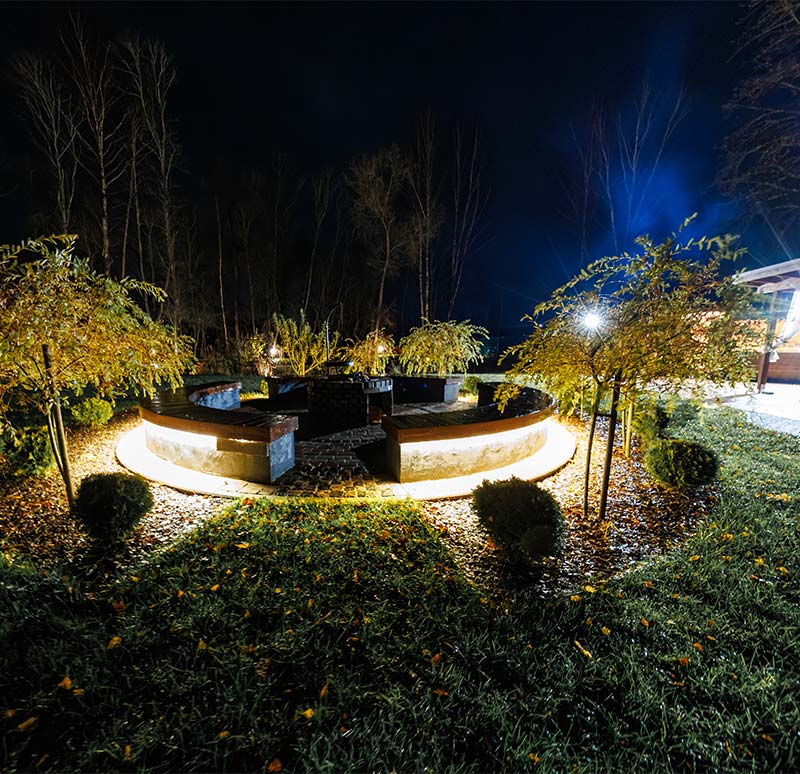
Behind the house is where most of the living actually happens, especially on warm nights. Here, the balance between safety and atmosphere is everything. Common pieces of a good backyard setup:
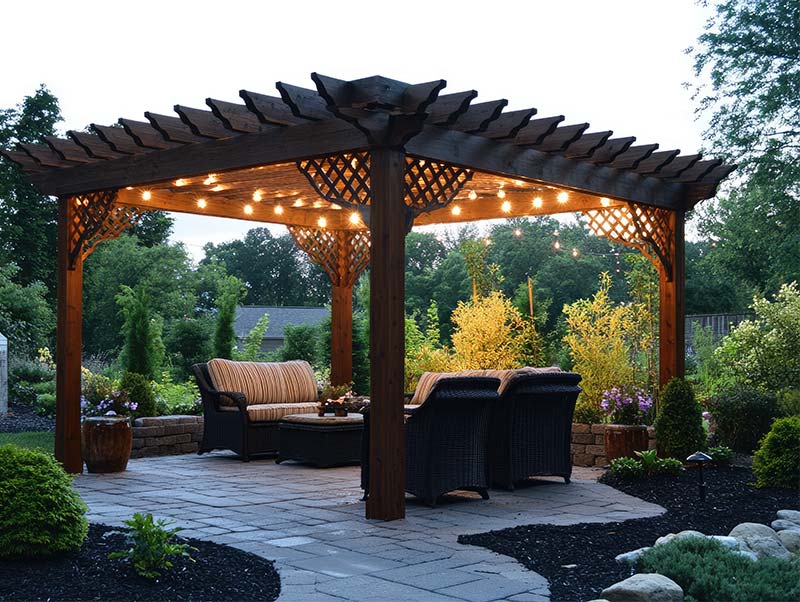
- Ambient lighting around seating and dining so everyone can see, but no one squints
- Accent lights in trees and planting beds that give shape to the yard
- Focused light for grills or outdoor kitchens so you are not cooking in the dark
- Extra care around slippery areas and water edges
The goal is that you can see every step, every edge and every face, but you still feel like you are outdoors at night, not under office lights.
Dock, boat lift and the water’s edge
If you have a dock or boat lift, you already know how sketchy it can feel fumbling around with a single harsh flood or a phone light. That is not ideal when you are one misstep away from the water. Good dock and waterfront lighting usually includes:
- Low, shielded fixtures along the edges so you know exactly where the boards stop
- Step or rail lights on stairs down to the dock
- Focused light where you board or secure the boat
- A restrained overall approach to avoid lighting up the whole bay
Here, fixture durability is critical. These are the pieces living closest to salt, spray and sometimes wave action, so coastal-grade construction is not optional.
Larger or more complex properties
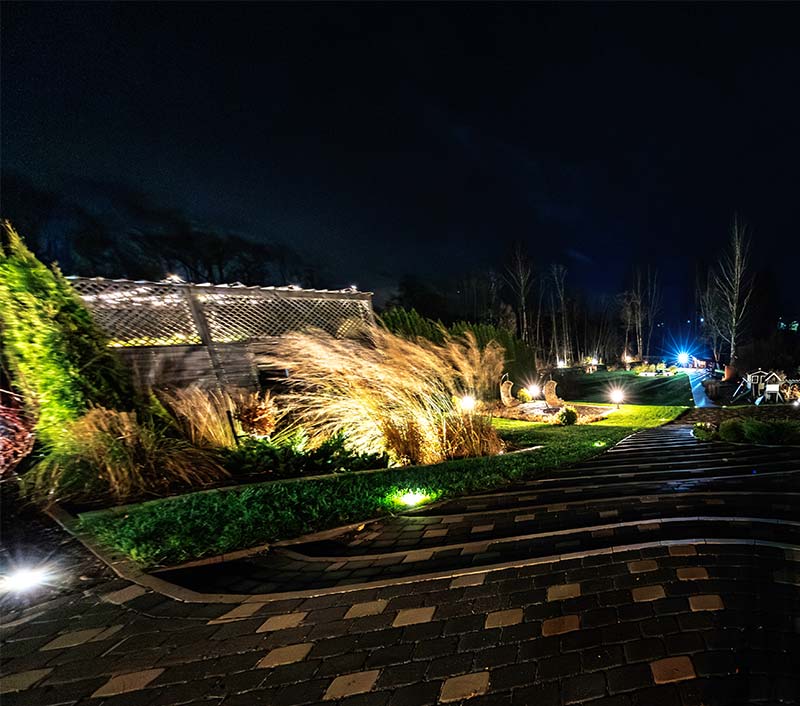
If you have a long drive, multiple structures or a larger spread, lighting becomes about tying everything together. That might mean:
- Drive lights that guide you from the road to the house
- Separate zones for main house, guest areas, pool and waterfront
- Signature lighting for a few standout trees or landscape features
It is about giving the property a calm, coherent nighttime presence instead of a patchwork of bright and dark.
How our landscape lighting process actually feels
Step 1: Walk the property and listen
We start on site. No shortcuts there. We walk with you and ask questions about how you really live:
- Where do people trip or hesitate now
- Which corners feel unsafe or “off limits” at night
- Where you’d love to sit if it did not feel so dark
You point, we listen. We pay attention to sightlines, grades, roots, existing plantings, utilities, all the unglamorous details that matter later.
Step 2: Build a design that fits your life and the coast
Next comes the plan. That includes fixture choices, beam angles, zone layout and a realistic look at budget. We keep it straightforward:
- Explain what we are proposing in plain language
- Show how we are accounting for salt, humidity and storms
- Talk through what absolutely needs to be done now and what could wait
It is your home and your money, so you should feel like you understand what you are saying yes to.
Step 3: Install with care, not chaos
On installation days, we treat your property like it is ours. That means neat trenches, clean wiring practices and mindful placement so we are not fighting with roots or irrigation lines.
We coordinate with your existing landscaping and hardscape to keep everything intact and tidy. When we leave, the goal is that you notice the lighting, not the fact that anyone was digging.
Step 4: Walk it at night and keep it tuned
Lighting is one of those things that only truly reveals itself after dark. So once everything is in, we like to do a nighttime walk-through with you.
That is when we:
- Adjust aim so you get the right highlights
- Tweak brightness if any spots feel too sharp or too dim
- Note any changes to make as plants grow or you add features
Given the storms and humidity we see here, we also talk honestly about simple ongoing care. Periodic checkups, especially after big weather, go a long way toward keeping the system reliable and looking good.
Cost, budgets and avoiding the mistakes that cost more later
What tends to drive the price
Pricing is not a one-size number, but a few things almost always matter:
- How big and complex the property is
- How many fixtures and of what quality
- Whether you have docks, slopes, long runs or tricky areas
- What kind of control and transformer setup you choose
High-quality coastal fixtures and low-voltage LEDs are an investment up front, but they are built for environments like ours. Cheaper options might look fine in the box but rarely age well in Gulf weather.
Why long-term value matters more than sticker shock
If you compare only initial price tags, it is tempting to grab the lowest number. But if that system uses more power, rusts out quickly or fails after the first couple of storms, it is not actually cheaper.
Efficient low-voltage LEDs paired with coastal-grade fixtures typically:
- Use far less electricity over time
- Require fewer replacements and service calls
- Hold their look and structure longer outdoors
So the “expensive” system can often be the one that saves you money and aggravation over the years.
Mistakes we see over and over again
A lot of our work starts with fixing someone else’s “good enough” lighting. Common trouble spots include:
- Big dark patches because there simply are not enough fixtures
- Harsh glare in your eyes when you walk up steps or look across the yard
- A mix of different color whites so nothing looks quite right
- Rusted, peeling fixtures a season or two in
- Dock lights that look bright but actually make it harder to see the water
Most of this is avoidable with a bit of planning and the right materials. If you already have a system that bugs you, we can usually reuse some pieces and correct the rest.
Why Gulf Coast homeowners call Deep South Landscaping
In a coastal market, you have plenty of choices. What you probably do not have is time to gamble on someone who is figuring it out as they go.
The things that matter in a lighting partner are pretty basic:
- Real experience working in this exact climate
- A clear, respectful process
- Designs that match how you live, not just what looks trendy online
- Straight answers about what is worth doing and what is not
That is what we aim to deliver every time we touch a property. Good lighting should lower your stress, not add to it.