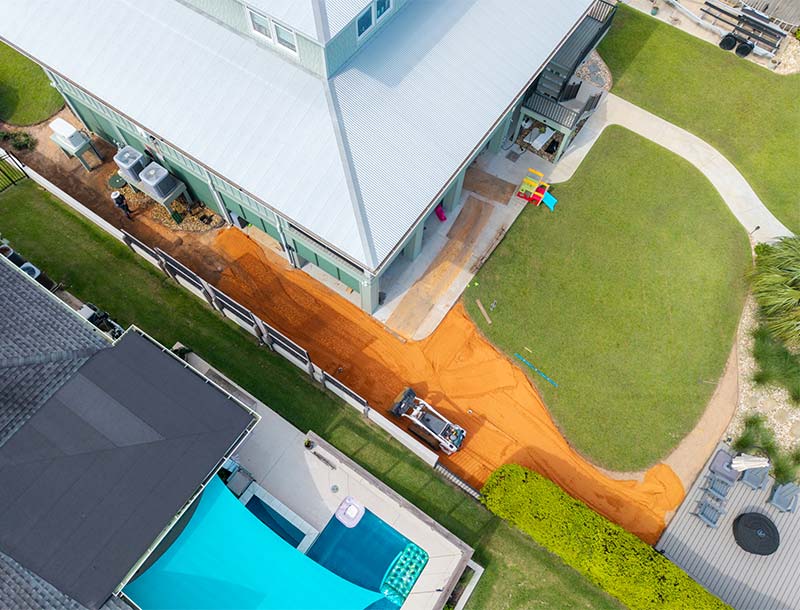
Hardscaping & Outdoor Structures
A landscape should feel effortless when it is finished. Quietly beautiful. Easy to live in. Built with enough foresight that nothing feels forced a few years down the road.
At Deep South Landscaping, we see hardscaping as the underlying structure that gives a landscape confidence. Done well, it solves problems first. Mud disappears. Slopes make sense again. Paths feel obvious. And only then does it invite you to linger. To sit. To cook. To gather without thinking about where your feet land.
When hardscaping is handled with care, it does not dominate the landscape. It steadies it.
What Hardscaping Really Does for a Property
Defining space, movement, and daily life outdoors
Hardscaping includes every built, nonliving element in the landscape. Patios. Walkways. Driveways. Decks. Retaining walls. Fire pits. Pergolas. Arbors. Edging. Water features.
These pieces shape how a property works. They create level ground where people naturally pause and gather. They establish routes that feel safe and predictable. They replace erosion, mud, and awkward transitions with surfaces that feel settled and intentional.
When we walk a property for the first time, the question is rarely about material. It is about movement. How do people arrive here. Where do they pause. Where do they avoid. A narrow step becomes an entry sequence. A worn patch of lawn turns into a dining terrace. A slope that once felt like a chore becomes a usable outdoor room.
Permanence that works in your favor
It is common to worry that hardscaping will feel too fixed. Too rigid. Too permanent compared with planting. In reality, permanence becomes an advantage when the layout is thoughtfully planned.
Hard surfaces anchor outdoor rooms. They give everything else a place to land. Planting, furnishings, and decor soften the space and shift with time. The hardscape stays steady while the landscape matures around it.
Solving problems plants alone cannot handle
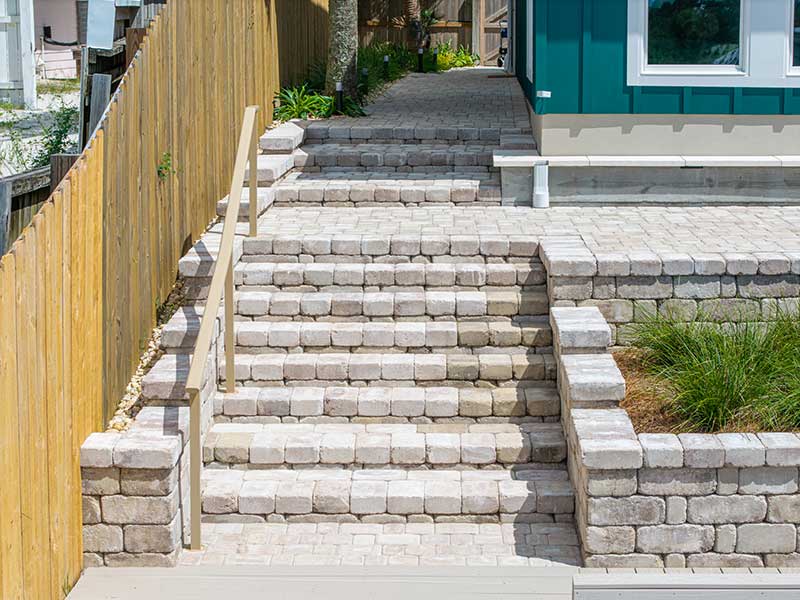
Some challenges ask for structure. A steep yard that refuses to cooperate with a mower can be reshaped with low retaining walls and terraces. These create safe, flat areas for play and seating while quietly managing erosion and water flow.
At Deep South Landscaping, decisions about what to build and what to leave green are guided by circulation, sightlines, drainage, and an honest assessment of how much maintenance a household wants to take on. Areas that see daily traffic benefit from hard surfaces. Edges, buffers, and views remain planted so the property still feels alive and breathing.
Choosing Pavers and Stone for Patios, Walkways, and Driveways
Understanding material options
Most projects begin with materials. Concrete pavers, brick pavers, and natural stone tend to lead the conversation for patios, walkways, pool decks, and driveways.
Concrete pavers offer consistency. Predictable sizing. A wide range of colors and patterns. Reliable interlocking performance. Natural stone brings variation and texture, with surfaces that feel shaped by time rather than manufactured, often at a higher material and installation cost.
Matching materials to real world use
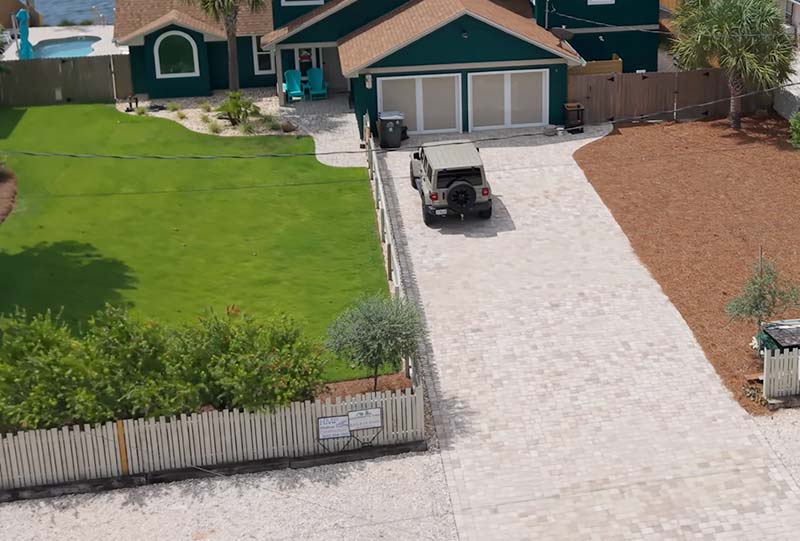
How a space is used matters more than how it looks in a sample board. Driveways require thicker pavers designed for vehicular loads and installed on deeper, more robust bases. Walkways and patios intended for foot traffic allow for thinner profiles and more refined finishes.
Around pools, lightly textured or tumbled surfaces with good slip resistance are favored. Lighter colors help keep surfaces cooler under summer sun, which makes a surprising difference under bare feet.
Not every attractive paver belongs in a driveway. Vehicular applications demand specific thickness and strength standards. Performance depends on the entire system working together, not just the surface you see.
Borders and edge details that quietly protect the work
Edge restraints are essential, even when they are barely visible. Whether concrete, plastic, or integrated paver courses, they keep pavers from drifting and spreading as seasons pass and bases flex.
These details also frame spaces visually. Contrasting borders highlight curves. They define steps. They guide movement across larger landscapes. The result feels deliberate rather than accidental.
Base Preparation, Drainage, and Paver Sealing
Why base work decides everything
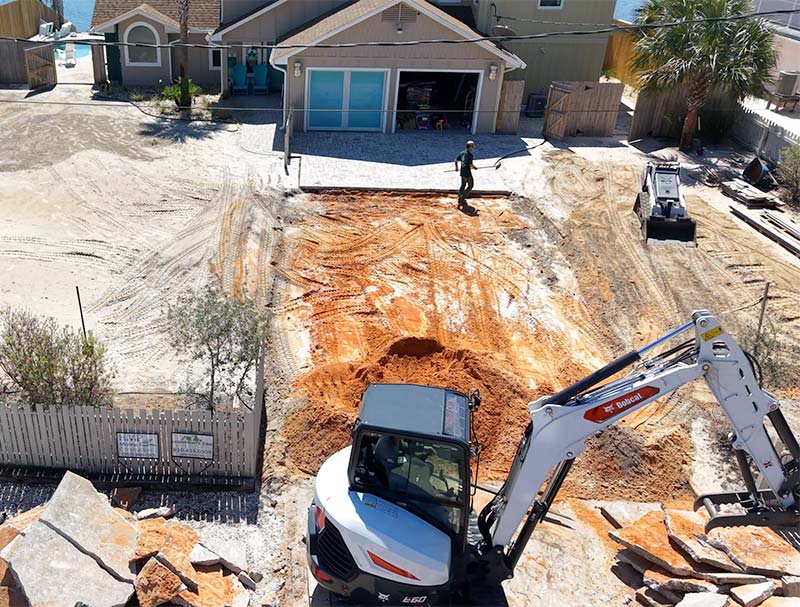
A hardscape can look perfect on installation day and still fail years later if the base was rushed. Most long term problems trace back to shallow excavation, poor compaction, the wrong base stone, or a lack of attention to drainage.
For patios and walkways, organic material is removed down to stable subsoil. Geotextile is installed where conditions call for it. A compacted base of crushed stone follows, topped with bedding sand. Driveways require deeper bases to handle vehicles through years of weather and use.
Designing for soil and water, not against them
Base depth and composition depend on soil conditions, use, and drainage patterns. Clay heavy or disturbed soils often demand deeper excavation and more careful layering than sandy, well draining soils.
Finished surfaces are subtly graded so water moves away from the home and toward safe dispersal points. Slopes are gentle enough for comfort while preventing puddling and long term saturation.
When sealing helps and when it does not
Paver sealing causes more confusion than it should. Sealers can deepen color, offer stain resistance, and help stabilize joint sand. They are not mandatory for every project.
Sealing should happen only after pavers have cured and surface residue has dissipated. Applied too early or too heavily, sealer can trap moisture, create whitening, or leave a slick film that is difficult to correct.
Retaining Walls, Edging, and Vertical Features
Retaining walls that do their work quietly
Retaining walls support soil, create terraces, and protect structures from shifting earth and water. Their success depends on what happens behind the wall as much as what you see.
Stable footings, free draining backfill, proper setback, and integrated drainage relieve pressure and prevent bulging or cracking over time.
Walls above certain heights or near structures may require engineering and permits. We review local requirements carefully and involve structural professionals when conditions call for it.
Using vertical elements to shape outdoor rooms
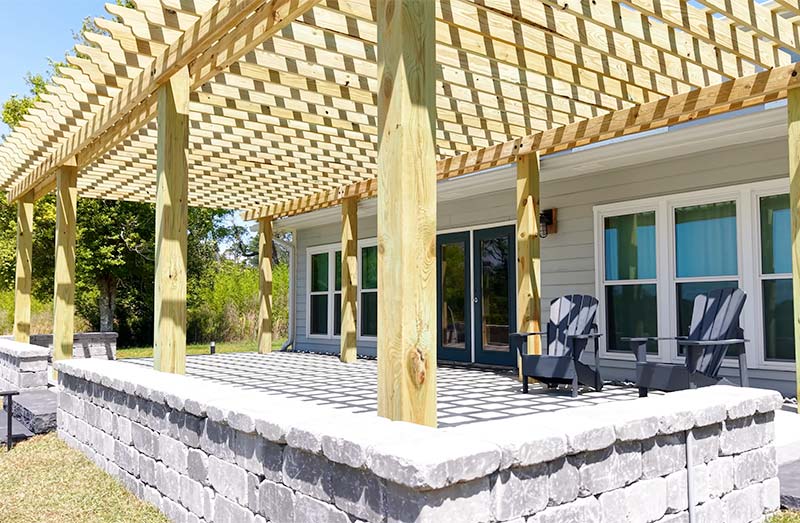
Not every vertical element carries structural load. Low seat walls, raised borders, pergolas, and arbors define space, guide circulation, and offer shade or enclosure without closing the yard off.
Edging keeps lawn from creeping into beds. It holds gravel and mulch in place. It creates crisp transitions that reduce maintenance creep and elevate the entire landscape visually.
Pergolas and arbors are positioned to frame views, mark entries, and create thresholds between the house, the main terrace, and quieter garden areas.
Fire Pits, Water Features, Decks, and Outdoor Kitchens
Fire features planned for comfort and safety
Fire pits extend outdoor living into cooler evenings and shoulder seasons. Placement matters. Adequate distance from structures, fencing, and low branches protects both safety and comfort.
Fire features sit on noncombustible surfaces and are aligned with prevailing winds so smoke does not drift toward doors or neighbors. Seating is spaced generously, allowing people to move easily without crowding the fire edge.
Lighting and walkways around fire features receive equal attention so steps and edges remain visible after dark.
Water features that soothe without adding stress
Fountains and small ponds introduce sound and movement. They also demand thoughtful detailing. Basins, liners, and surrounding paving are designed to capture splash and guide water away from foundations.
Accessible equipment locations simplify maintenance. Clear guidance on water levels and cleaning schedules helps homeowners enjoy the feature without worry.
Decks versus ground level terraces
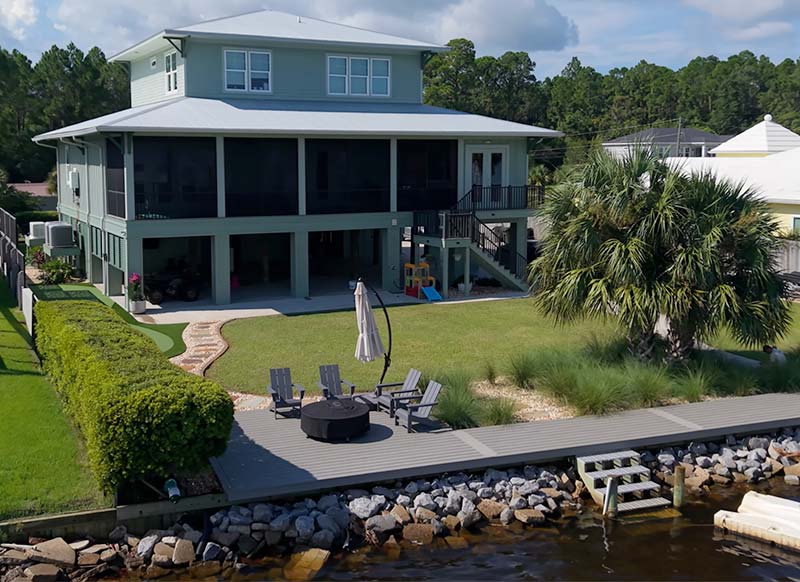
The choice often comes down to elevation and feel. Decks suit homes where the main floor sits well above grade. Ground level paver terraces excel when the goal is a broad, solid surface that flows naturally into the landscape.
Outdoor kitchens built with the future in mind
Outdoor kitchens require early coordination of gas, electric, water, ventilation, and clearances. By designing appliance layouts alongside paving patterns and service access, we create kitchens that are comfortable to use today and straightforward to maintain or update later.
Planning, Budget, Timeline, and Ongoing Care
Starting with clarity instead of guesswork
Most hesitation around hardscaping comes from uncertainty. The first conversation focuses on function, use, constraints, timeline, and how much disruption a household can comfortably manage.
Budget discussions happen early and honestly. Typical ranges help shape scope so decisions feel intentional rather than reactive.
Phasing with foresight
Phasing allows major elements to be built now while preparing for future additions. Utilities, footings, and layout decisions made early prevent costly rework later.
What ownership really looks like
The process moves from site analysis and concept planning to detailed design, pricing, permitting where required, and construction. Clear milestones and approvals keep expectations aligned.
Hardscapes are lower maintenance than planting, but not maintenance free. Periodic cleaning, joint inspection, drainage checks, and seasonal reviews of fire, water, and kitchen components protect long term performance.
Early warning signs include settling, pooling water, loose pavers, wall movement, clogged drains, or staining that does not respond to standard cleaning. Addressing these early often prevents much larger repairs down the road.