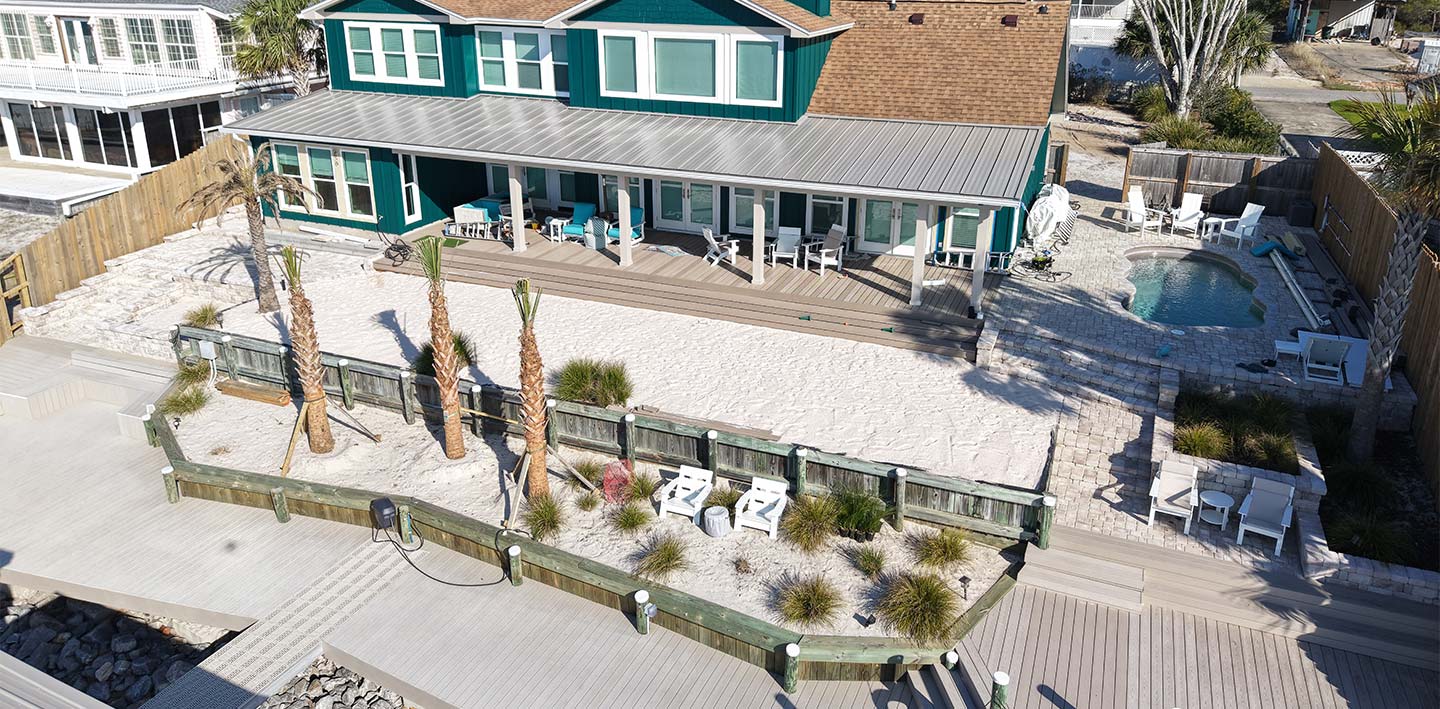
Coastal Landscaping &
Native Plant Specialists
Protect your Gulf Coast property with coastal landscaping designed for real life on the water. From salt‑tolerant plantings to erosion control, drainage, and year‑round maintenance, we create Gulf‑Strong outdoor spaces for homes, rentals, and HOAs across the Florida and Alabama shoreline.
You already know this if you live anywhere near the Gulf: a yard can look picture perfect in April and then, after one solid storm or a salty week of wind, it suddenly looks like it aged ten years. The lawn gets patchy, beds slump, a few “big box special” plants give up entirely, and you start wondering why you paid for landscaping that clearly wasn’t built for where you live.
That is really the heart of coastal landscaping on the Gulf Coast. It is not some fancy style trend. It is the practical art of building an outdoor space that can take a hit from salt, wind, sandy soil and storm season, then get up the next morning and still look like your home instead of a construction site. For Deep South Landscaping, that means thinking about Gulf Coast reality first, curb appeal second, and never treating your property like a generic inland yard.
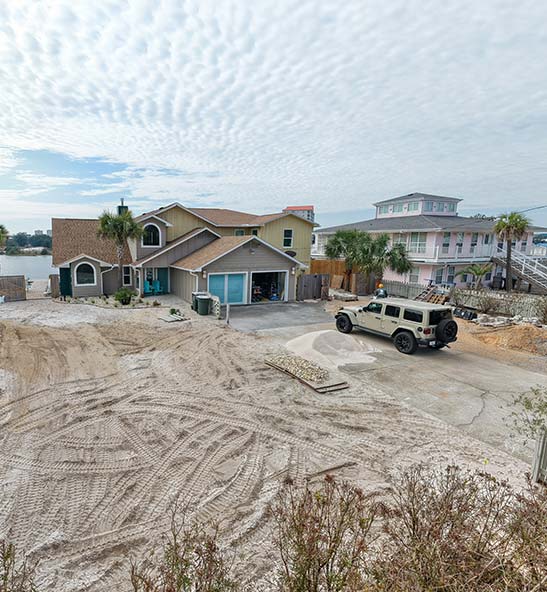
Coastal Landscaping Built for Gulf Coast Conditions
Let’s start where you probably are right now. You want your place to look good, yes, but you also want to stop worrying every time a storm line shows up on the radar. You want to step outside and see a yard that fits your house and your life on the coast, not something that only works in a brochure.
Coastal landscaping, the way we practice it here, is about designing and maintaining your outdoor space specifically for life along the Florida and Alabama shoreline. We plan for salt spray drifting in off the water, for soil that drains faster than your morning coffee, for heat that sticks around long after the beach crowds go home, and for wind that can turn a badly chosen tree into a real safety concern.
Our job is to pull all of that together in a way that feels simple on your end. You tell us how you use the property, what you are tired of fighting, and what you want this place to feel like when you step outside. We bring the coastal know‑how, the plant knowledge and the installation crew that actually understands the Gulf.
What Makes Coastal Landscaping Different on the Gulf Coast?
The Environmental Realities Your Yard Faces
If you have ever tried to copy a landscape from an inland neighborhood, you have probably learned this the hard way. The coast plays by its own rules.
Closer to the water, your plants are getting hit with salt in the air, and sometimes even saltwater in the soil. Many standard plants simply cannot tolerate that for long. The soil itself tends to be sandy and quick draining, which sounds nice until you realize it does not hold moisture or nutrients very well, so roots have to work harder just to hang on.
Add in steady wind, the occasional tropical storm or hurricane, and that familiar mix of heavy rain followed by stretches of dry, hot weather. It is a tough environment. If your landscape is not designed for those conditions, it is like putting a cardigan in a hurricane and hoping for the best.
That is why coastal landscaping is not just “regular landscaping near the beach.” It has to start with the way the site behaves under stress, not just how it looks on a calm day.
How Coastal Lifestyles Change Landscape Needs
Then there is the way you actually live on the property, which matters more than people think. A year‑round family home, a short‑term rental and an HOA entrance all ask very different things from the same piece of ground.
If this is your primary home, you might want privacy from neighbors, shade where you actually sit, room for kids or pets to play, and a yard that feels welcoming after a long day. You probably do not want to spend every weekend fixing beds and chasing dead patches of grass.
If it is a vacation rental or second home, the landscape becomes part of your marketing and your peace of mind at the same time. Guests see the front of the property in photos long before they ever walk in the door. You need curb appeal that holds up through busy seasons, materials that can handle constant use and simple maintenance between bookings.
For HOAs and community common areas, the priorities tilt toward consistency, safety and predictability. Entrances and shared spaces need to look cared for without draining the budget, and they have to be maintainable by crews who are working around residents and visitors.
Good coastal design should make all of this clear, so the yard fits the way you actually live rather than some one‑size‑fits‑nowhere plan.
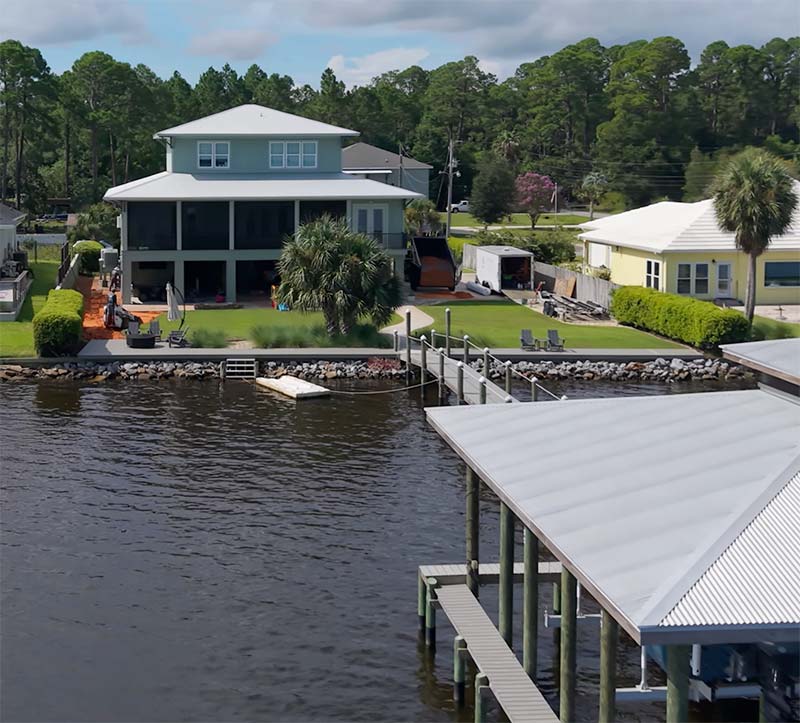
Our Gulf‑Strong Coastal Landscaping Blueprint
To keep things honest and simple, we run every coastal project through the same core approach: Protect, Plant, Preserve. It is not a slogan. It is how we avoid guesswork and give you a yard that holds up.
- Protect: Shape the land, control water and reduce erosion and storm damage before anything else.
- Plant: Choose and place trees, shrubs, grasses and groundcovers that actually like it here and can handle salt and wind.
- Preserve: Set up irrigation and maintenance so your landscape stays healthy and attractive instead of slowly sliding backwards.
If a recommendation does not fit into one of those three, we question why it is there.
Pillar 1 – Protect (Erosion, Drainage, and Storm Resilience)
Before we talk about flowers or pavers, we look at how water moves on your property and how wind hits it. That is the foundation. If that part is wrong, you will always be fighting something.
We start by walking the site and paying attention to low spots, how the soil feels underfoot, where water has clearly sat in the past and where things are already washing away. From there, we make a plan.
That can look like subtle grading to steer water where it should go instead of toward your foundation, swales that guide runoff, or drains tucked into the layout so they do the work without screaming for attention. In sandy coastal soils, we like to combine that with surfaces that let water through instead of turning into slick, flooded patios.
On slopes, near shorelines or any place you see soil moving, we lean on plants with deeper root systems, groundcovers that knit the soil together and strategic planting to anchor the edges. The idea is to calm things down so a heavy rain is an event, not a crisis.
Then we think about wind and salt. That means putting tougher, salt‑friendly plants where they take the brunt of the exposure, and placing more delicate choices where they are naturally sheltered by buildings, fences or those tougher plants. Over time, that “living buffer” does a lot of quiet work protecting everything behind it.
For anything that crosses into structural territory, like seawalls or major shoreline engineering, we will tell you so plainly and point you toward the right kind of professional. The landscape should work with that kind of infrastructure, not pretend to replace it.
Pillar 2 – Plant (Salt‑Tolerant, Gulf‑Proven Plants)
Once we know the land is protected, we can let ourselves think about the part you see first: the plants. This is where a lot of homeowners get burned, usually by using whatever looked nice on a tag without asking whether it actually wants to live near the Gulf.
We lean toward plants that have a track record in coastal conditions. They hold up better to salt in the air, they tolerate sandy soil and heat, and they bounce back faster after rough weather. That does not mean everything has to scream “beach,” but it does mean every plant has a job and a reason to be there.
A simple way to think about it is by roles instead of Latin names. You need taller structure, mid‑level interest and a low layer that locks in the soil and softens hard edges.
We often use:
| Plant role | Coastal benefit | Where it tends to go |
|---|---|---|
| Canopy trees or palms | Shade, structure, some wind softening | Key views, seating areas, anchor points |
| Shrubs and mid‑story | Privacy, seasonal interest, buffering | Along lines, near windows, framing entries |
| Ornamental grasses | Movement, erosion control, visual texture | Slopes, borders, near exposed edges |
| Groundcovers | Soil stability, low‑effort coverage | Steep spots, along paths, in tight spaces |
The goal is a plant palette that feels natural for the Gulf but still matches your home’s style and color preferences. You should be able to look at your yard and think, “That fits here,” not “That belongs three states away.”
Pillar 3 – Preserve (Irrigation, Maintenance, and Lifecycle Care)
Even the best coastal design will fade if no one is caring for it, but when it is set up right the ongoing work can be pretty straightforward.
The first piece is water. Sandy coastal soil does not hang on to moisture the way heavier soils do, so we rely on irrigation systems that deliver water efficiently where it is actually needed. That might mean drip in beds, smart controllers, or zoning that separates sun‑baked areas from shadier pockets. The idea is to water enough, not blindly.
Then there is regular maintenance. Pruning, refreshing mulch, managing pests and feeding plants at the right times make a huge difference, especially heading into and out of storm season. Those routines are different here than they are in milder inland climates, and they matter a lot more if you want the yard to recover quickly when the weather acts up.
Finally, there’s storm preparation and recovery. Before the season ramps up, we can help you clean up weak branches, clear problem spots in drainage and make sure loose items are not going to turn into projectiles. After a major event, a quick look at roots, slopes, and salt‑stressed plants can prevent small issues from turning into bigger problems months later.
If you live out of town, or you simply do not want to juggle all of this yourself, a maintenance plan built for coastal conditions keeps things steady without you needing to micromanage.
Coastal Landscaping Services We Offer on the Gulf Coast
Design & Installation for Coastal Properties
Every project starts with a conversation on your property. We walk it together, you tell us what is working and what is driving you crazy, and we take notes on the practical stuff you may not even notice anymore, like where water always lingers after a storm.
From there, we typically move through a simple path. We assess sun, wind, salt exposure, soil and existing features. We design using the Protect, Plant, Preserve approach, then select plants and materials that match both your taste and the conditions. Once you are comfortable with the plan, our crews install it with an eye for detail, from grading and drainage to the final layer of mulch.
At the end, we walk it again with you, explain what we have done and talk about how the landscape will change over the first year or two. That is usually when it starts to feel less like “a project” and more like part of your home.
We serve coastal neighborhoods and communities up and down the Florida and Alabama Gulf Coast, including the areas around Pensacola, Gulf Shores and Orange Beach.
Coastal Landscape Maintenance & Enhancements
If your yard is already built but not behaving, or if you simply want a partner to keep things on track, we offer coastal‑aware maintenance and enhancement services.
That can include mowing and lawn care tuned to coastal grasses, trimming and shaping shrubs and trees, bed cleanups, mulch, plant health checks and storm clean‑up when needed. For some properties, we also suggest gradual upgrades, replacing weak performers with stronger coastal choices over time instead of ripping everything out at once.
For second homes and rentals, our focus is on keeping the property guest‑ready and owner‑ready, even if you are not here to see every visit in person.
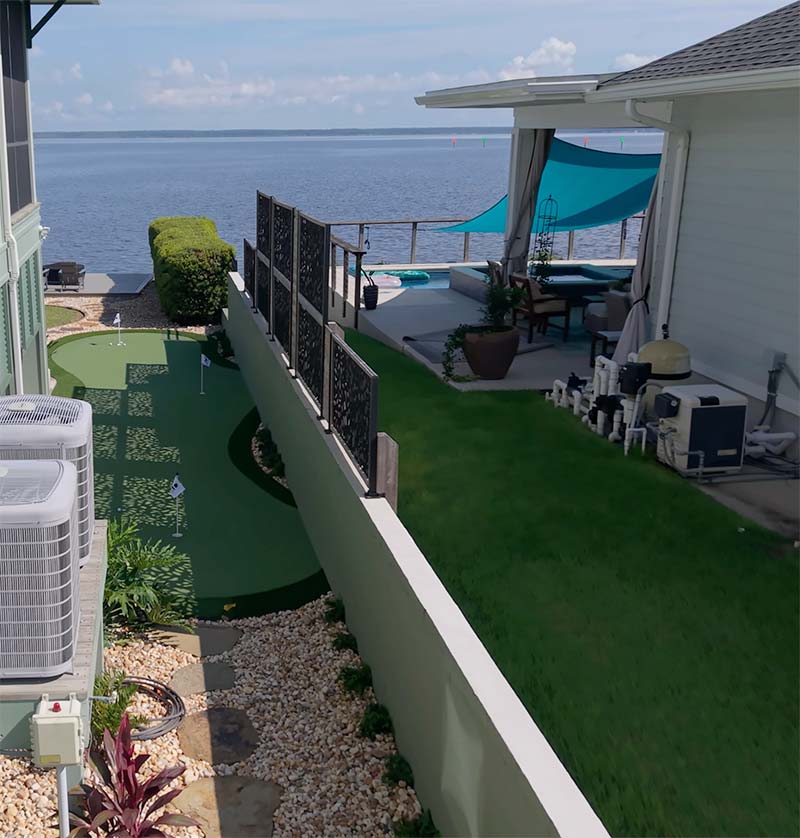
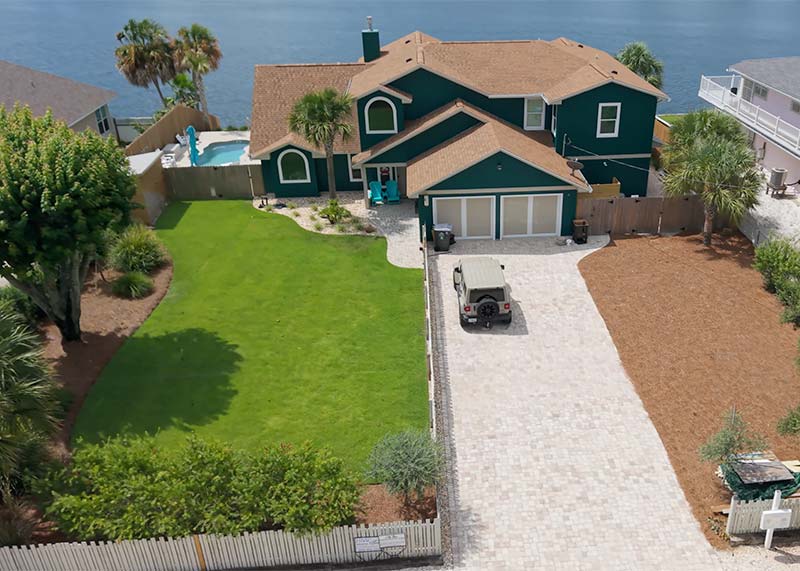
Real‑World Coastal Landscaping Scenarios We Design For
Beach‑Adjacent Primary Homes
If this is where you wake up most mornings, your landscape should make everyday life easier, not harder. You may want shade to take the edge off the afternoon heat, privacy from nearby houses, a place for kids or dogs to run and a view that feels calm rather than cluttered.
We often design these properties with planted privacy screens that also block wind, shade trees near outdoor seating, durable turf in the most heavily used areas and hardscapes that feel comfortable under bare feet and stand up to salt and sand. The overall effect should feel relaxed and livable, not fragile.
Vacation Rentals and Investment Properties
Rentals live a different life. They see luggage dragged across walkways, sandy feet on every surface and guests who may not treat the plants as gently as you would. At the same time, the landscape is part of your online first impression.
For these properties, we focus on high‑impact curb appeal that photographs well, plants that can tolerate inconsistent attention, outdoor spaces that are intuitive for guests to use and materials that are easy to clean and hard to damage. That combination keeps your place looking good in person and online without constant emergency calls.
HOA and Community Common Areas
Community entrances, medians and shared greens are everyone’s front yard at once. They quietly tell residents and visitors how the neighborhood is cared for.
We design these spaces with clear, attractive sightlines, plant selections that perform reliably across different exposures and a layout that keeps maintenance efficient instead of turning every visit into an obstacle course. Seasonal updates can refresh the look without rewriting the whole design each time.
How to Choose the Right Coastal Landscaper on the Gulf Coast
Questions to Ask Before You Hire
Choosing a landscaper near the Gulf is not the same as choosing one a couple of hours inland. A few direct questions can save you a lot of frustration later.
Ask things like:
- Can you show me completed coastal projects within a short drive of my property?
- How do you approach drainage and erosion control on coastal sites like this one?
- Which salt‑tolerant plants would you lean toward for my particular exposure to wind and salt?
- What happens after installation, and what kind of maintenance support do you offer?
You are looking for answers that feel grounded in local experience, not vague reassurance. A good partner should be able to point to real properties in nearby communities and explain their thinking without hiding behind buzzwords.
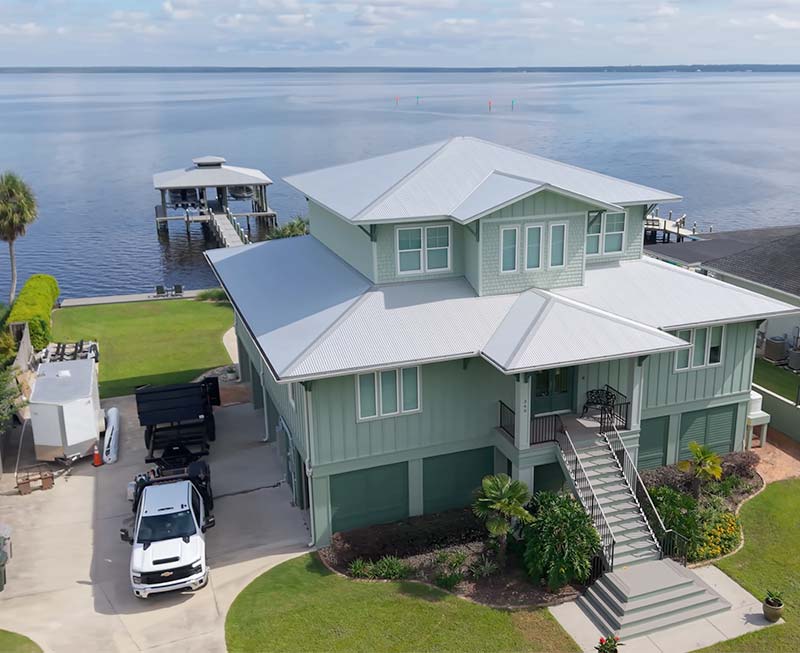
Why Homeowners Choose Deep South Landscaping
People along the Gulf Coast tend to be direct. They want someone who knows what they are doing, says what they mean and then shows up.
What we hear most often from clients is that they appreciate three things: our familiarity with coastal conditions, our clear process and the fact that we can handle design, installation and maintenance in a connected way. You do not have to teach a new crew about your property every season.
Our crews live and work in this region. They know the local soils, the way storms roll through, the expectations of Gulf Coast communities and the difference between a landscape that looks good in a photo and one that actually holds together in real weather. That is the standard we build to.
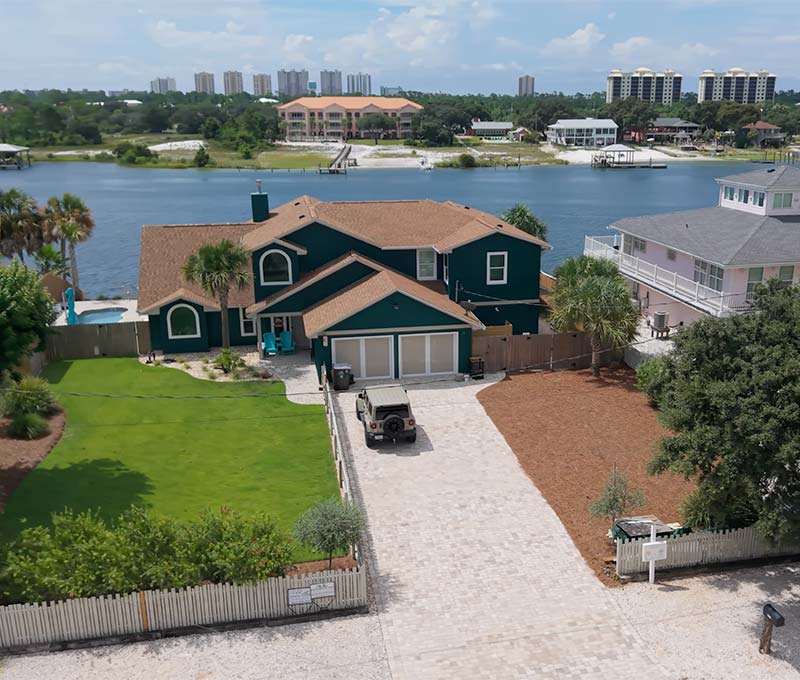
Coastal Landscaping FAQs
What is coastal landscaping?
Coastal landscaping is the practice of designing and caring for outdoor spaces in shore‑adjacent areas using plants, materials and layouts that can handle salt, wind, sandy soil and stronger weather without constant replacement.
How do you protect a coastal yard from erosion?
We combine grading and drainage solutions with deep‑rooted plants and groundcovers that lock soil in place, especially on slopes and exposed edges. The goal is to slow and guide water rather than letting it tear through and take your yard with it.
Which plants are best for coastal landscaping in Florida and Alabama?
The “best” plants are the ones that match your specific exposure and soil, but in general we favor salt‑tolerant trees, shrubs, ornamental grasses and groundcovers that have proven themselves in Gulf Coast conditions instead of fragile, inland‑focused choices.
How do you handle landscaping for sandy soil?
We work with the soil, not against it. That usually means improving key planting areas, selecting plants adapted to sandy conditions, and designing irrigation that accounts for the fact that water moves through this soil quickly instead of hanging around.
How much does coastal landscaping cost on the Gulf Coast?
There is no honest one‑number answer, because the price depends on property size, existing conditions, plant and material selections and whether we are starting fresh or rebuilding. The most useful step is a walk‑through on site, where we can talk through what you want and what the property needs, then put real numbers to a real plan.
Ready for a Gulf‑Strong Coastal Landscape?
Owning property near the Gulf should feel like a gift, not a never‑ending landscaping project. With the right design and care, your yard can stand up to salt, storms and sandy soil and still welcome you home at the end of the day.
If there is one idea to keep in mind, it is this: coastal conditions are different, and your landscape should be too. Protect the site first, plant what truly thrives here, and preserve it with smart irrigation and maintenance. When those pieces line up, the constant cycle of repair and re‑planting starts to fade into the background.
If you are ready to see what that could look like on your property, the next step is simple. Schedule a coastal landscape assessment. We will walk the yard with you, talk through the trouble spots and opportunities and outline a plan that fits your piece of the Florida and Alabama Gulf Coast.